Miami-Dade County · FL
Mold Removal in Aventura, FL
Mold & Allergy LLC provides doctor-led mold removal, remediation, and inspection across Aventura and surrounding Miami-Dade County neighborhoods including The Waterways, Williams Island, Aventura Lakes.




About Mold in Aventura
Aventura runs between the Florida East Coast Railway and the Intracoastal Waterway, with Dumfoundling Bay along its eastern edge and Maule Lake at the southern boundary, barely seven feet above sea level. Development began in the early 1970s, when Don Soffer's group broke ground on what was then called Turnberry. Aventura Mall opened on Biscayne Boulevard in April 1983, and the city incorporated on November 7, 1995. That timeline left a housing stock dominated by 1970s and 1980s cast-in-place concrete towers — masonry and gypsum partitions behind the balconies — ringing Country Club Drive, with later construction filling in along Biscayne Boulevard and The Waterways. Both 2005 hurricanes struck here directly. Katrina made its Florida landfall between Aventura and Hallandale Beach on August 25, and Wilma crossed on October 24.
Why Mold Is a Problem in Aventura
A cooled tower standing in 85-degree Atlantic air develops real pressure differences across twenty-plus stories, and at the upper floors those differences draw humid outside air inward. Corridor make-up air delivered above its own dew point sheds no moisture on the way in, and unbalanced corridor-to-unit pressure pushes it through shared demising walls and the vertical riser chases that stitch the floors together — unlit, unconditioned, and opened perhaps once a year. Damp gypsum inside those chases is where Cladosporium establishes, out of sight of the units on either side.
Neighborhoods We Serve in Aventura
- The Waterways
- Williams Island
- Aventura Lakes
ZIP codes served: 33180.
Our Services
From initial inspection to complete remediation, we handle every step with doctor-level care and precision.
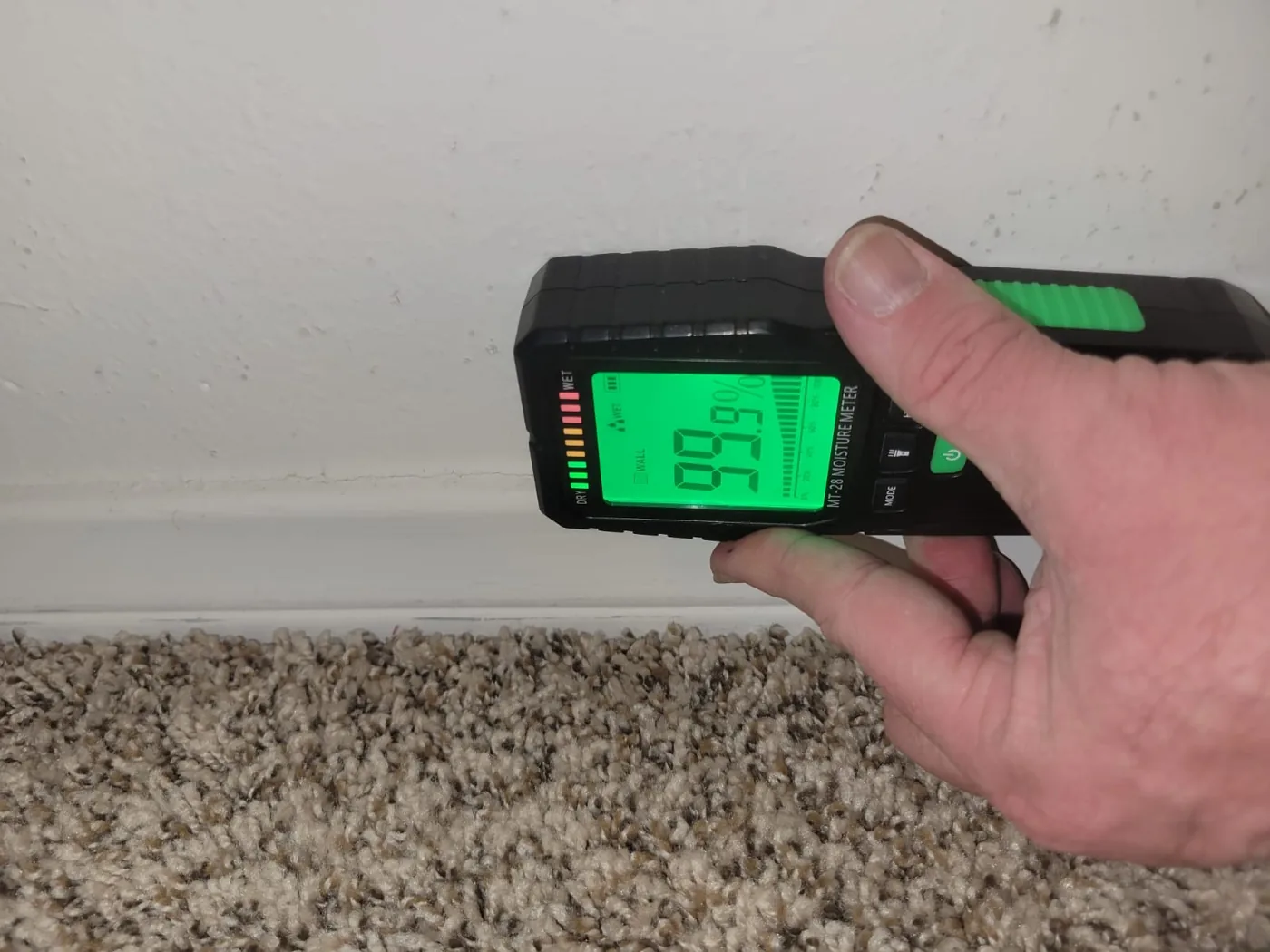
Moisture Meter Testing
Professional moisture-meter readings pinpoint hidden water in walls, ceilings, and floors — finding the moisture before the mold, documented right on your inspection report.
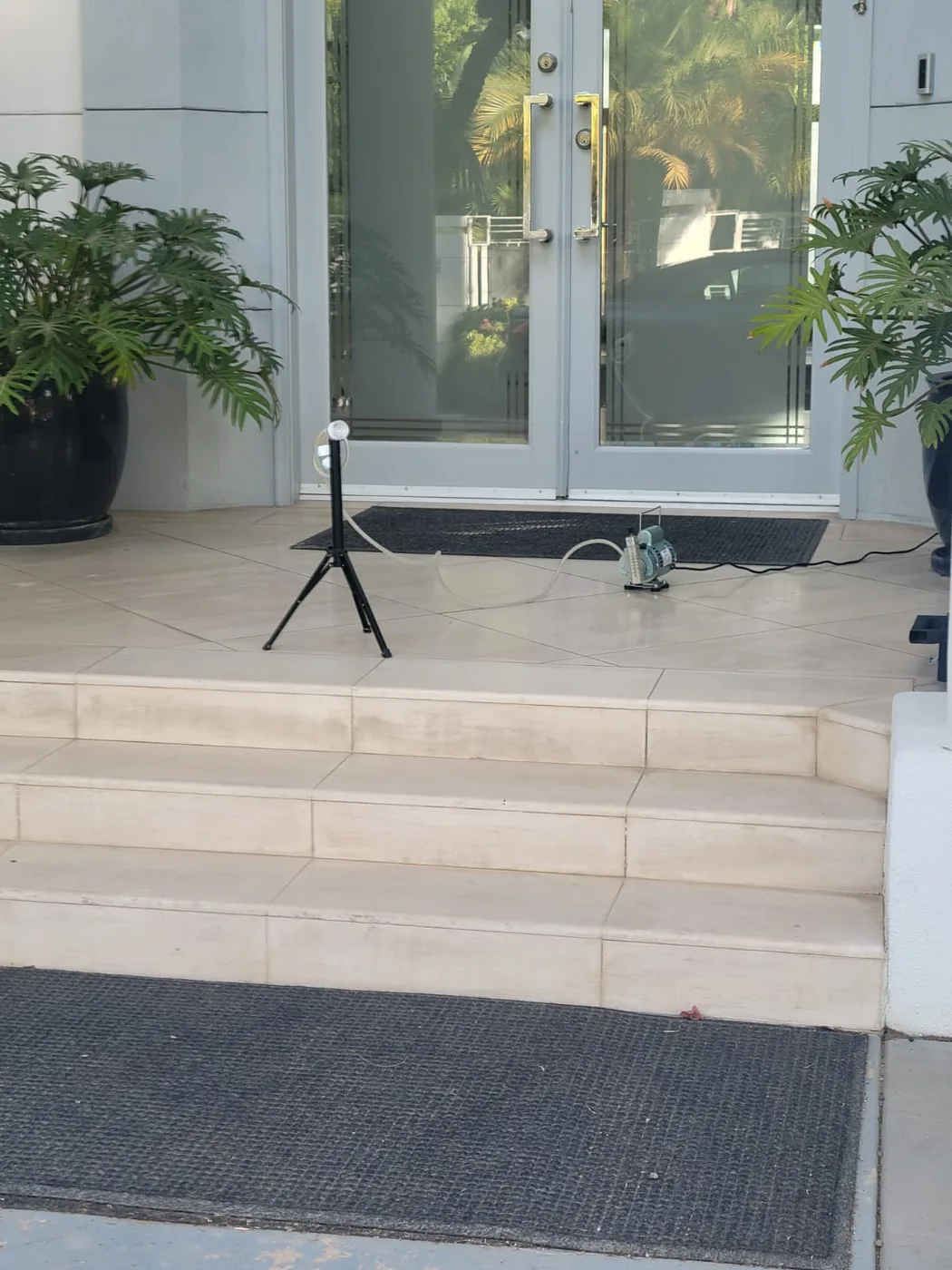
Mold Testing
Lab-certified sample analysis to identify mold species and assess health risks. Accurate results you can trust.
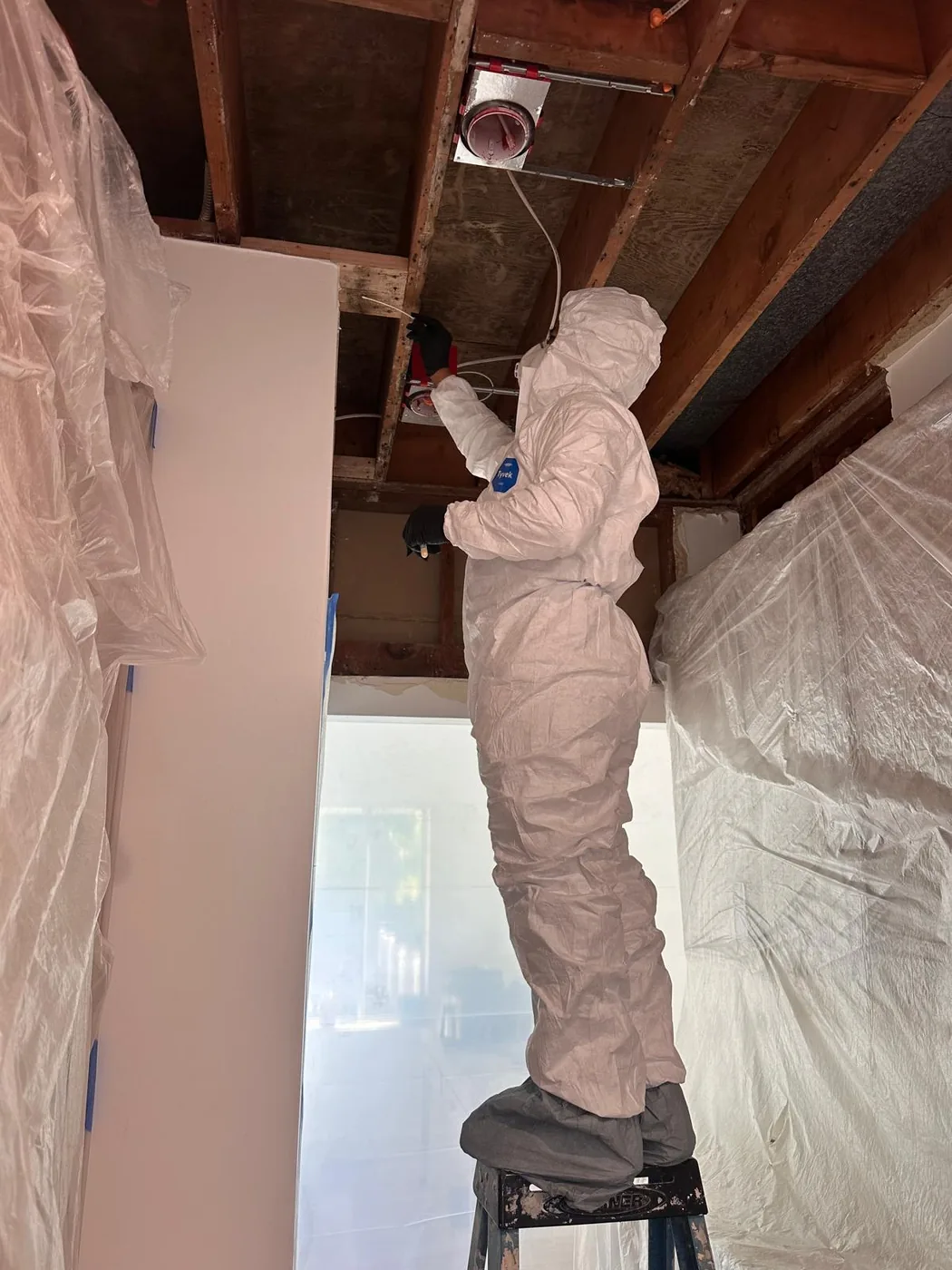
Mold Removal & Remediation
Complete mold removal, containment, treatment, and clearance testing — including black mold remediation — with before/after documentation.
Types of Mold We Identify and Remove
We test for 19 mold species and spore categories — the same panel an AIHA-accredited Florida lab reports on every spore-trap. The six most common indoor species are shown first; expand the panel below to see every category we test for.
Black Mold
Stachybotrys chartarum
Often labeled "toxic black mold" — produces mycotoxins linked to respiratory irritation, chronic coughing, and worsened allergies in sensitive individuals. Removal should be done by certified, fully suited professionals.
- Where it's found
- Drywall, ceiling tiles, and wood that has stayed wet for 7+ days — typically after a roof leak, slab-leak, or hidden plumbing failure. Memnoniella, a closely related genus, is grouped with Stachybotrys on most lab reports.
- What it looks like
- Dark green-black, slimy or wet appearance when active.
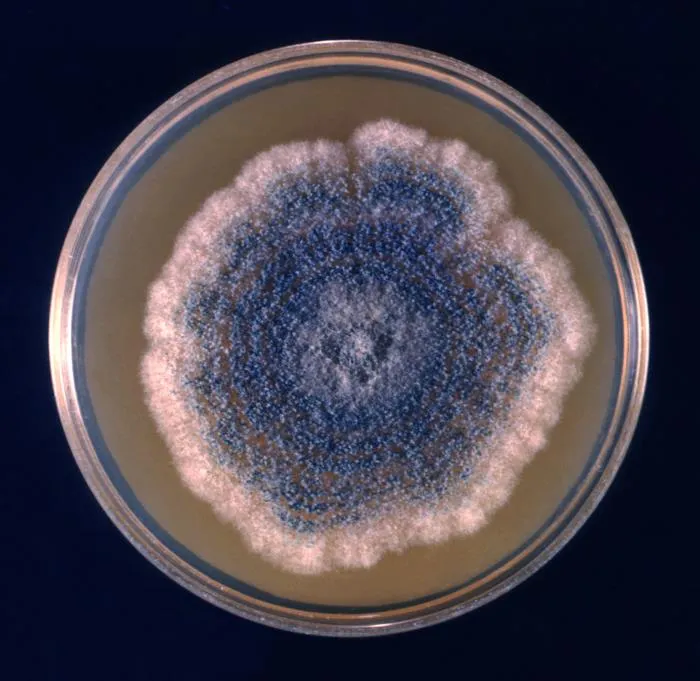
Aspergillus
Aspergillus spp.
One of the most common indoor molds. Most species are harmless to healthy adults but can trigger asthma, sinus infections, or aspergillosis in immunocompromised individuals.
- Where it's found
- HVAC systems, damp insulation, food, leather, paper. Loves warm humid air — a near-constant concern in Florida.
- What it looks like
- Yellow, green, brown, or black powdery patches; often fuzzy at the edges.
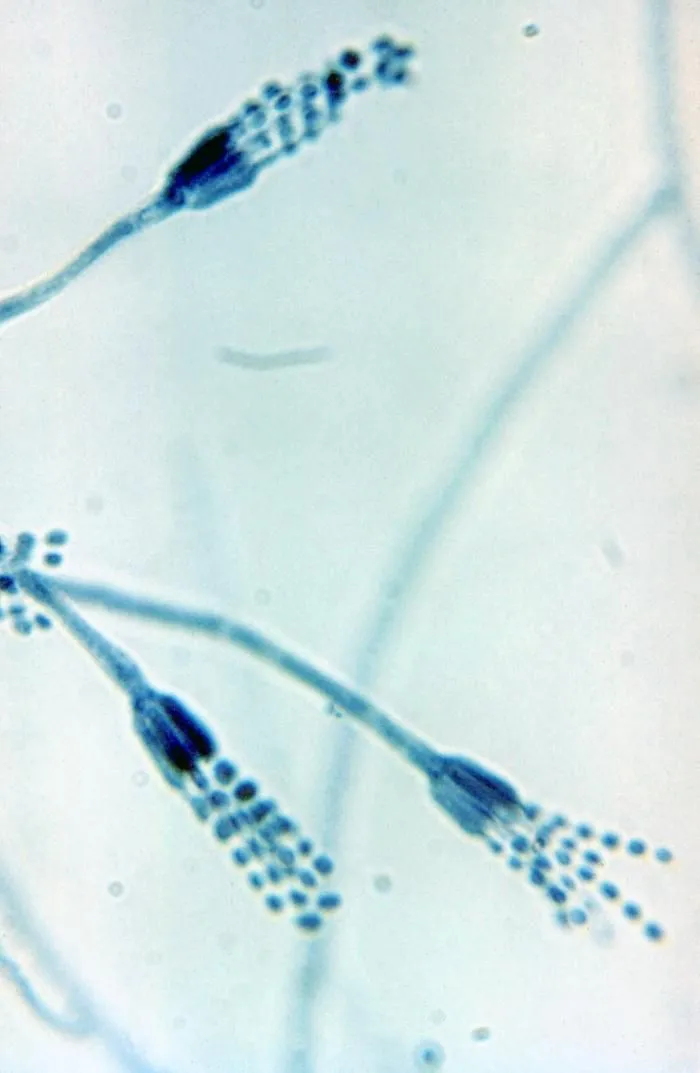
Penicillium
Penicillium spp.
Common allergy trigger. Continuous exposure can worsen asthma and cause chronic sinus inflammation. Some species produce mycotoxins on water-damaged building materials.
- Where it's found
- Water-damaged carpets, wallpaper, mattresses, and fabric. Frequently appears within 24–48 hours of a leak.
- What it looks like
- Blue-green or grey powdery patches; smells musty.
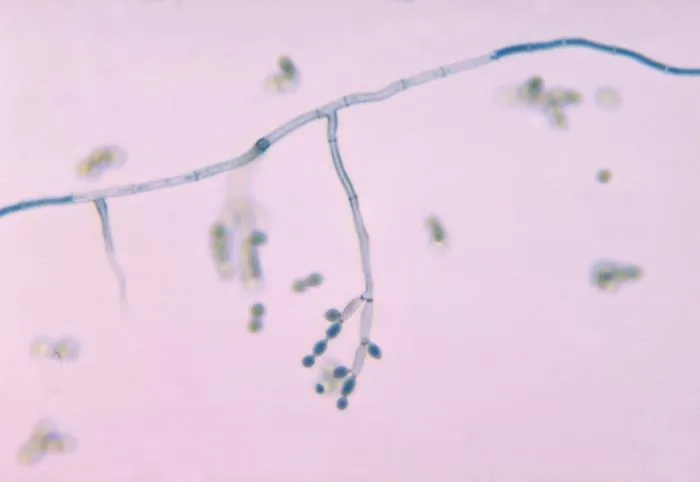
Cladosporium
Cladosporium spp.
Triggers hay-fever-like symptoms, asthma flares, and skin rashes. Tolerates cool temperatures, so it can grow even in refrigerators and AC drip pans.
- Where it's found
- Bathrooms, kitchens, basements, HVAC drip pans, behind toilets, on shower grout.
- What it looks like
- Olive-green to black; velvety or suede-like texture.
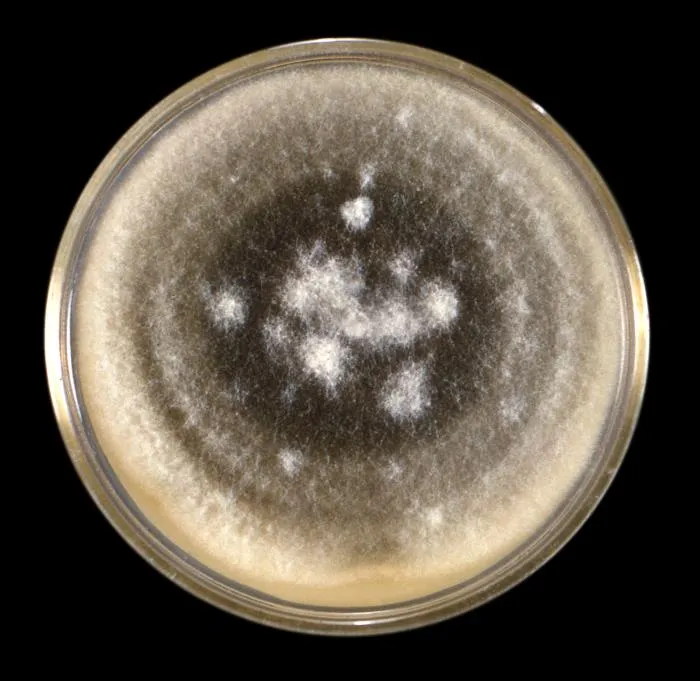
Alternaria
Alternaria alternata
One of the most well-known asthma triggers — outdoor exposure is normal, but indoor growth concentrates spores and can drive severe respiratory reactions in sensitized people. Ulocladium, a visually similar genus, is grouped with Alternaria on most lab reports.
- Where it's found
- Window seals, shower stalls, around tubs, under sinks. Wherever condensation lingers.
- What it looks like
- Dark grey-green or brown; wool-like or velvety.
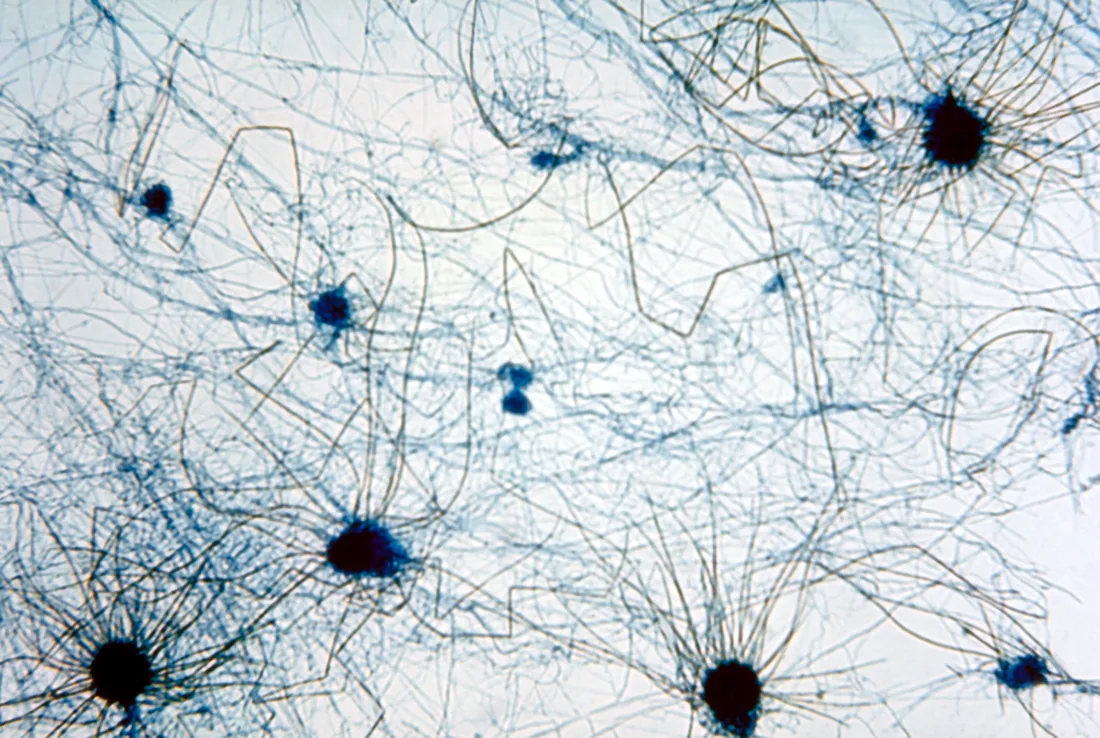
Chaetomium
Chaetomium spp.
A water-damage indicator species — its presence almost always means a hidden long-term moisture problem. Can produce mycotoxins; linked to allergic and neurological symptoms.
- Where it's found
- Behind drywall and under wood floors that experienced flooding or a sustained leak.
- What it looks like
- Starts white and cottony, then matures to grey, brown, or black.
Additional species and spore categories on the lab panel
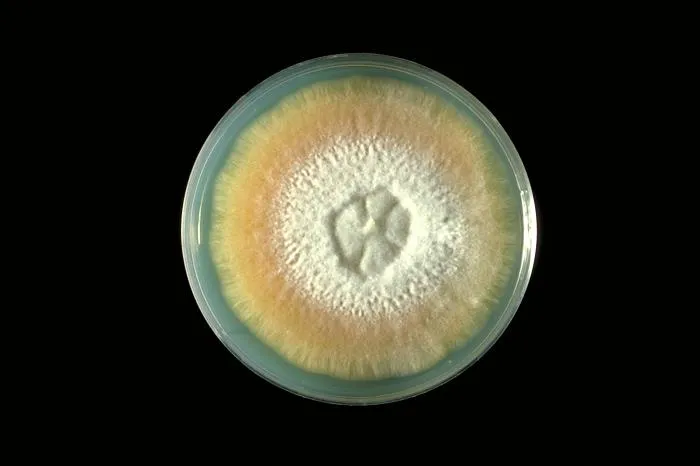
Fusarium
Fusarium spp.
Allergenic and a water-damage indicator. Some species produce mycotoxins (trichothecenes, fumonisins) that can cause more serious health effects; rarely opportunistically pathogenic in immunocompromised patients.
- Where it's found
- Water-damaged carpet, drywall, and wallpaper; also soil and plant debris carried indoors. Often appears after a flood or sustained slab moisture.
- What it looks like
- Pink, white, salmon, or red-orange colonies; cottony or wool-like texture; fast-growing.
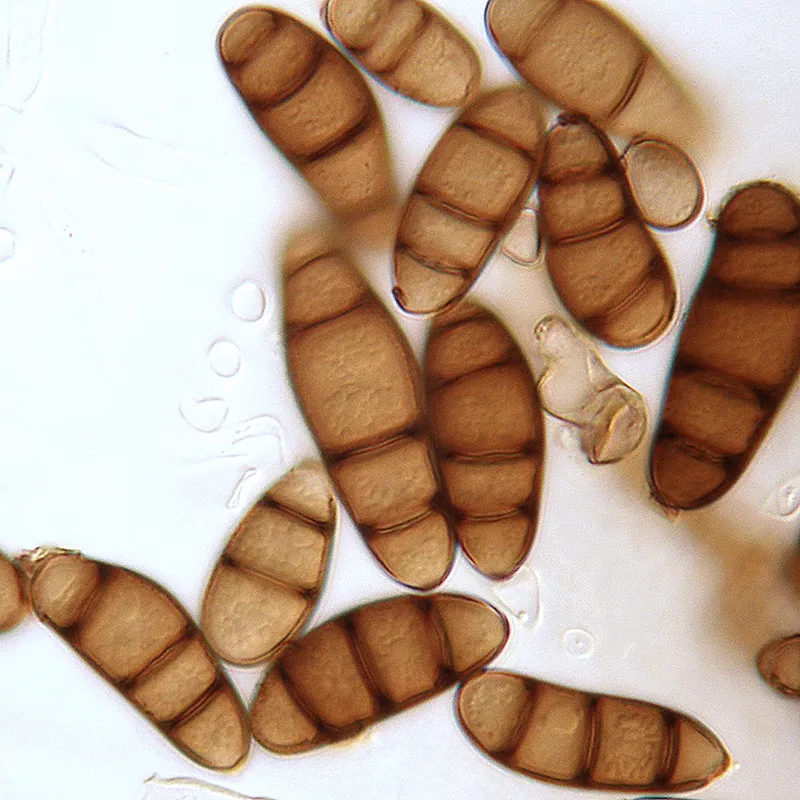
Curvularia
Curvularia spp.
Triggers hay fever, asthma, and allergic fungal sinusitis. In immunocompromised patients can cause cerebral abscess, keratitis, or pneumonia. Saprotrophic on dead plant material outdoors.
- Where it's found
- Damp paper, wood products, and fabrics indoors. Outdoors: dead plant material and soil. Indoor presence often signals chronic humidity, not flooding.
- What it looks like
- Greenish-black to dark olive colonies with woolly or velvety texture; curved (banana-shaped) spores under the microscope.
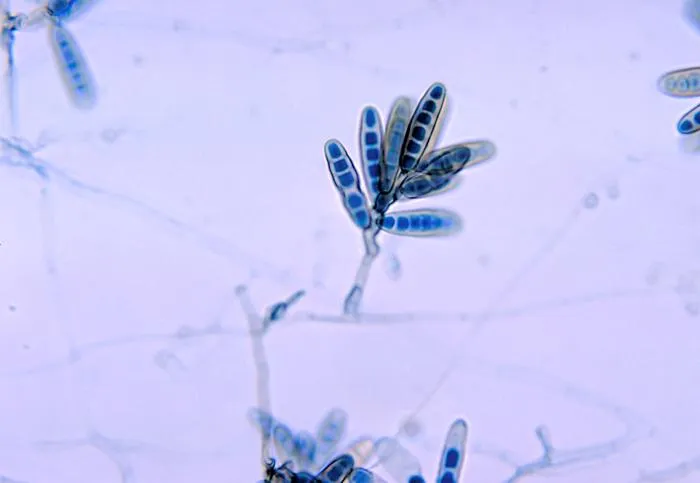
Bipolaris
Bipolaris spp.
Allergy trigger associated with allergic fungal sinusitis and asthma. In rare immunocompromised cases can cause cerebral or pulmonary infection. Primarily an outdoor plant pathogen.
- Where it's found
- Plants, soil, decaying organic matter outdoors; indoors usually reflects dust and outside-air infiltration. Reported on most Florida spore-trap panels.
- What it looks like
- Dark grey to black colonies, velvety surface; long banana-shaped (bipolar) spores.
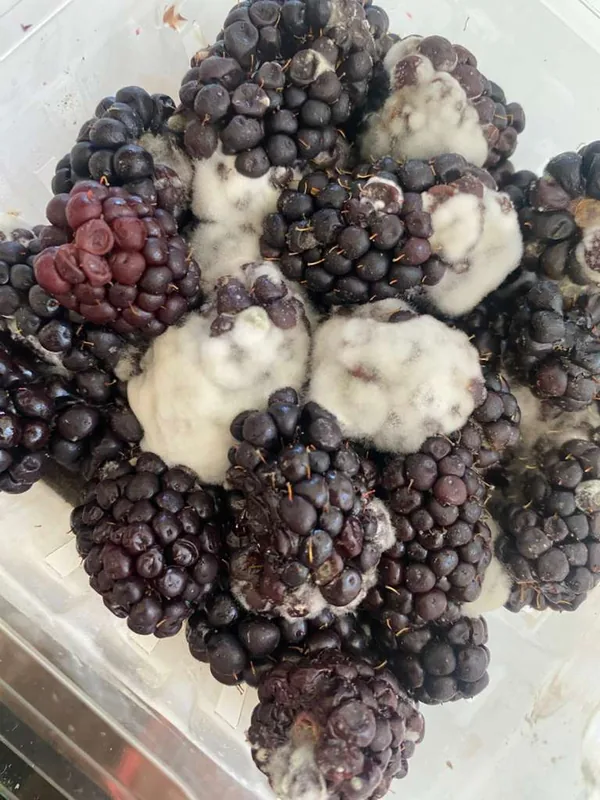
Botrytis (Gray Mold)
Botrytis cinerea
Primarily a plant pathogen rather than an aggressive indoor invader. Spores are allergenic — chronic exposure has been linked to "winegrower's lung," a hypersensitivity pneumonitis, and can trigger asthma in sensitized people. Generally not opportunistically pathogenic in healthy adults.
- Where it's found
- Decaying fruit, vegetables, and houseplants brought indoors; occasionally damp cellulose materials. Florida humidity makes stored produce a reliable indoor spore source. Best known outdoors as the "gray mold" of strawberries, grapes, tomatoes, and ornamentals.
- What it looks like
- In culture: gray-brown fuzzy mycelium with visible sporulation patterns across the agar surface. On host plants: a grey dusty fuzz over softened tissue that releases visible spore clouds when disturbed.
Epicoccum
Epicoccum nigrum
Common allergy trigger — hay fever and asthma. Generally not opportunistic; produces minimal toxins. Found everywhere outdoors so background indoor levels are normal.
- Where it's found
- Plant material, soil, paper, textiles. Outdoor air everywhere; elevated indoor counts suggest outside-air infiltration or contaminated cellulose materials.
- What it looks like
- Yellow-orange to red-brown colonies with cottony or woolly texture; mature colonies darken to deep brown.
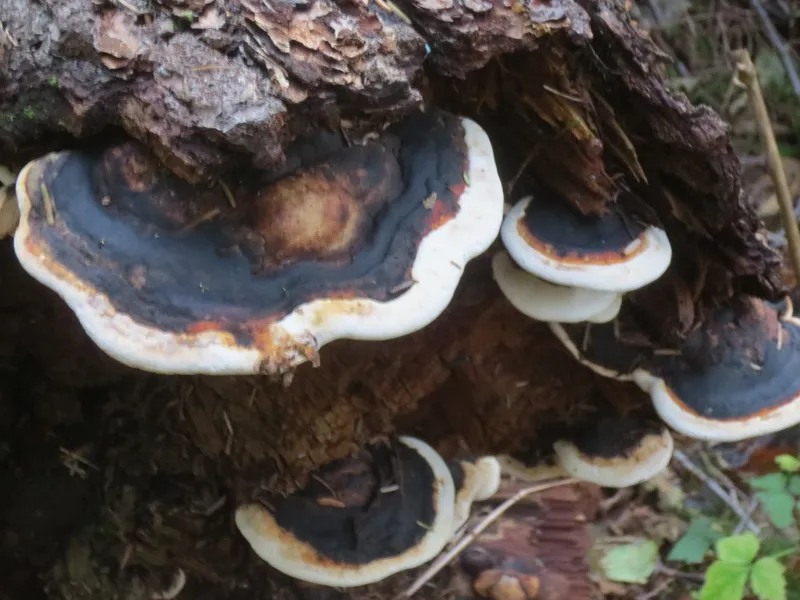
Ganoderma
Ganoderma spp.
Major outdoor allergen during summer and fall spore release. Indoor presence usually means contaminated woody material or hidden wood-decay fungi reaching structural framing.
- Where it's found
- Decaying hardwood, tree stumps, sometimes structural wood behind sheetrock if hidden moisture has reached framing.
- What it looks like
- Large brown shelf-like fruiting bodies on trees ("artist's conk"); spores produce visible brown powdery clouds in late summer.
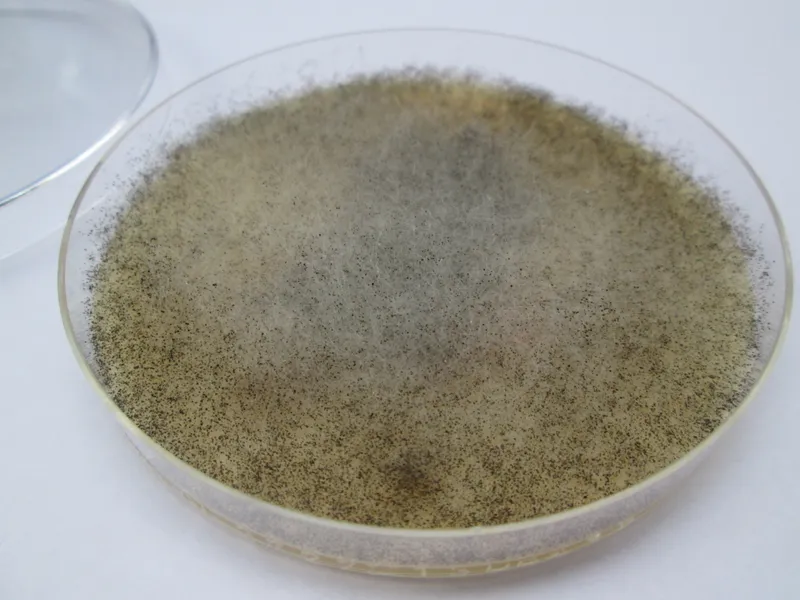
Zygomycetes (Mucor / Rhizopus)
Mucor spp., Rhizopus spp.
Generally non-allergenic but fast-growing and visually alarming. Can cause invasive mucormycosis in severely immunocompromised patients (especially diabetics). Sometimes called "bread mold" or "pin mold".
- Where it's found
- Bread, fruit, damp carpet, water-damaged building materials. Frequently the first organism to colonize after a flood — can cover surfaces overnight.
- What it looks like
- White to grey cottony fuzz that explodes in size within 24-48 hours; matures to black as spore-producing pin heads form.
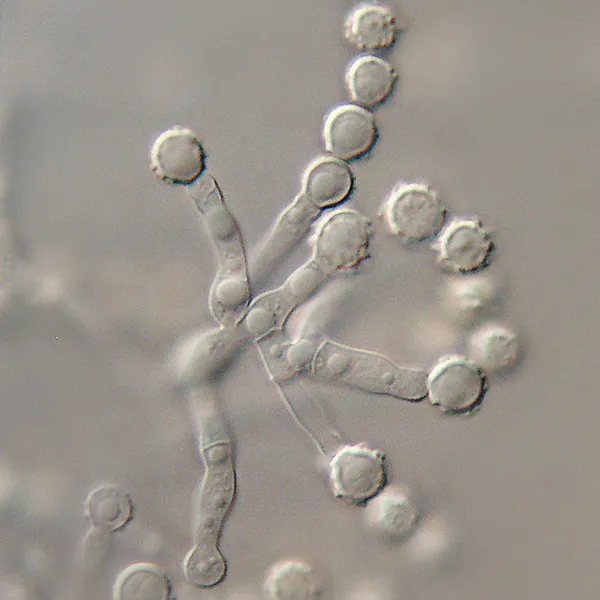
Scopulariopsis / Microascus
Scopulariopsis spp.
A water-damage indicator. Some species produce mycotoxins; can cause persistent nail infections (onychomycosis) and rarely systemic infections in immunocompromised patients.
- Where it's found
- Water-damaged drywall, mattresses, wallpaper. Often grows behind cabinets, under bathroom flooring, or inside walls with chronic leaks.
- What it looks like
- Cream to light brown granular colonies; ages to a powdery tan, grey-brown, or olive surface.
Pithomyces
Pithomyces spp.
Primarily an outdoor allergen (asthma trigger). Some species produce sporidesmin, a mycotoxin causing facial eczema in livestock; human exposure is mostly via dust inhalation, not indoor growth.
- Where it's found
- Pasture grass, dead leaves, decaying plant debris outdoors. Indoor presence usually reflects outside-air infiltration; rare on building materials.
- What it looks like
- Dark olive to black colonies with a velvety texture; conidia are dark brown, warty, and football-shaped under the microscope.
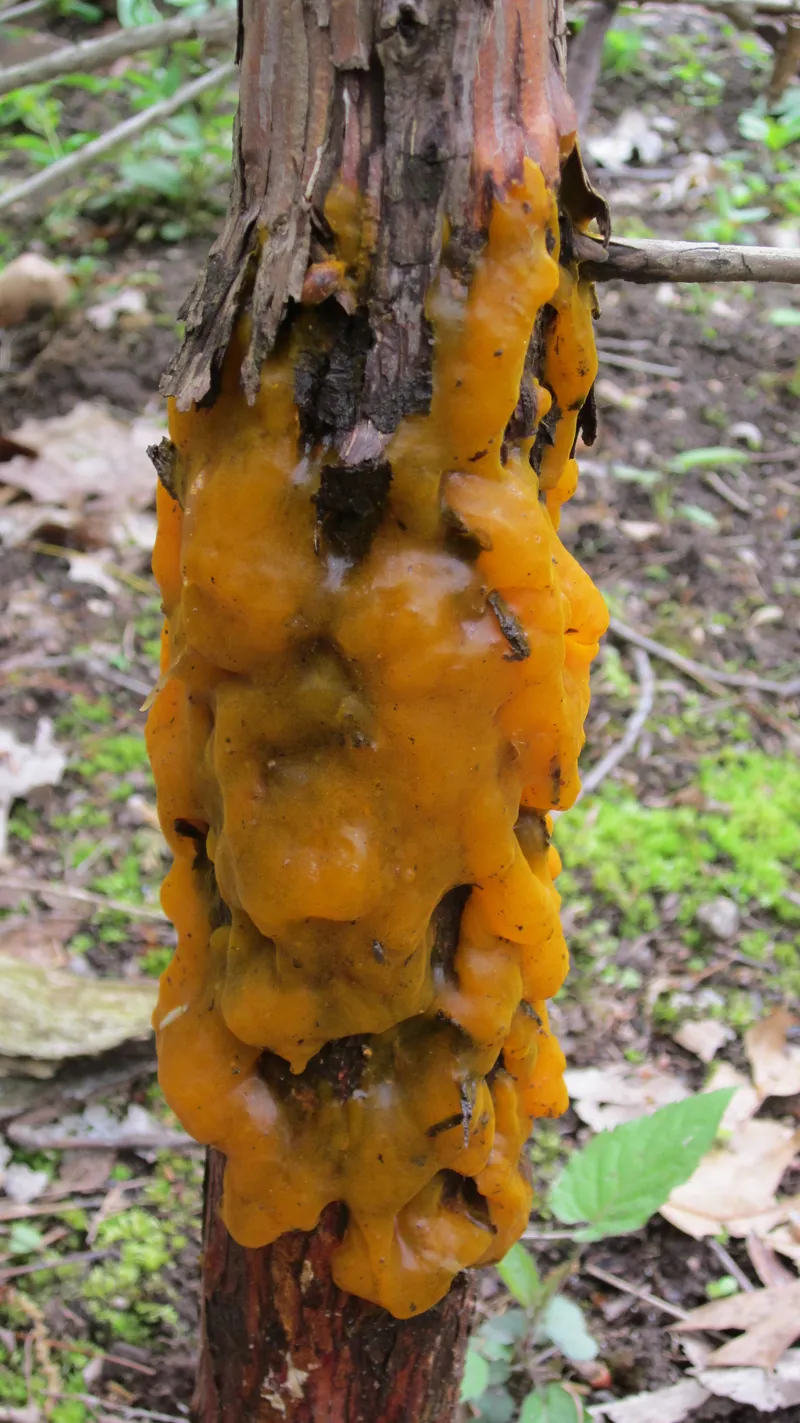
Slime Molds (Myxomycetes)
Myxogastria spp.
Allergenic — large spores can trigger asthma flares. Not pathogenic to humans. Technically not "true" molds (they're protists), but reported on standard spore-trap panels.
- Where it's found
- Decaying wood, mulch, leaf litter outdoors. Indoor presence is rare; sometimes seen on damp basement wood or along condensation paths near windows.
- What it looks like
- Vivid orange, yellow, pink, or red gelatinous masses that mature into dark spore-producing fruiting bodies; can creep slowly across surfaces.
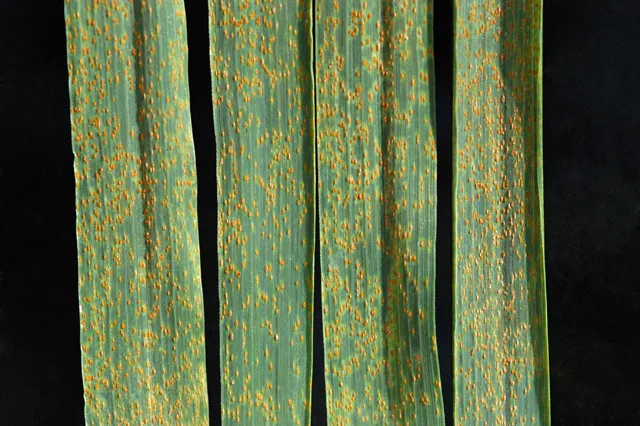
Rust Fungi
Pucciniales
Outdoor allergen — heavy spore release during plant-disease outbreaks. Not pathogenic to humans. Never grows indoors; an indoor reading reflects outside-air infiltration only.
- Where it's found
- Living plants outdoors — wheat, grass, roses, cedar, beans. Spores carry on wind currents into homes through windows and HVAC intake.
- What it looks like
- Orange-red powdery pustules on leaves and stems; individual spores microscopic and rust-orange in color (hence the name).
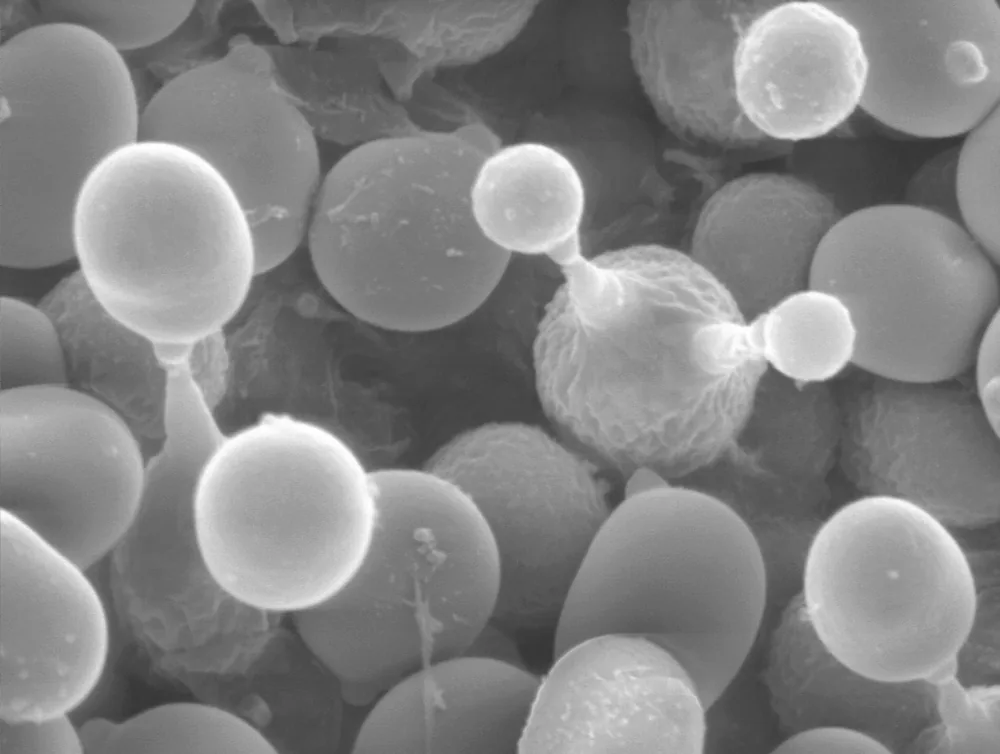
Basidiospores
Basidiomycota (catch-all)
Allergy trigger — a major component of outdoor air spore loads, peaking in summer and fall. Some genera linked to hypersensitivity pneumonitis ("farmer's lung", "humidifier lung").
- Where it's found
- Outdoors: forest floors, wood-decaying fungi, mulched gardens, lawns. Indoors: indicates hidden wood-decay fungi behind drywall, in crawl spaces, or in attics with active moisture.
- What it looks like
- Source bodies are macroscopic — mushrooms, shelf fungi, puffballs. The spores themselves are microscopic and vary in color (white, brown, black, pink).
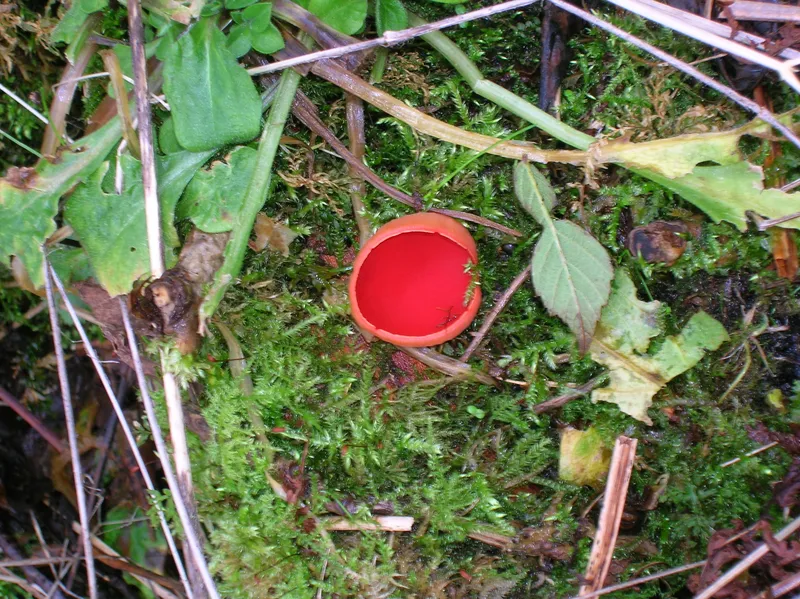
Ascospores
Ascomycota (catch-all)
Allergenic — common component of outdoor air, peaks after rain. Many environmental species, a few opportunistic pathogens. This grouping covers spores from a vast phylum of fungi.
- Where it's found
- Forest floors, decaying plant material, soil, water-damaged paper. Many indoor molds (Stachybotrys, Chaetomium, Penicillium, Aspergillus) belong to this phylum.
- What it looks like
- Source bodies range from microscopic asci to visible fruiting bodies like cup fungi, morels, and the bright orange Cordyceps shown here.
Not sure what you're looking at? Request a free inspection — we'll test, identify, and remove any species we find.
Frequently Asked Questions
Answers to the questions Naples homeowners ask most often about mold inspection, removal, remediation, and what to do first when you suspect a problem.
How much does mold inspection and removal cost?
How long does mold remediation take?
Is black mold actually dangerous?
Does homeowners insurance cover mold removal?
What are the health symptoms of mold exposure?
Can I clean up mold myself with bleach?
Do I need to leave my home during mold remediation?
Should I get a mold inspection before buying a home?
What should I do first if my home flooded?
What is clearance testing and do I need it?
How fast can you come out for an inspection?
What happens during a mold inspection?
Don't see your question? Ask us directly — we respond within one business day.
Also Serving Nearby Areas
Get Your Free Mold Quote
Tell us what's going on and we'll get back to you within one business day — free, no obligation.